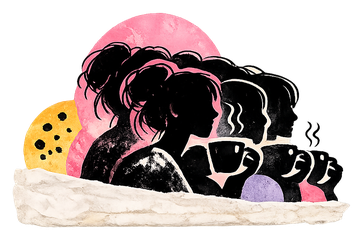
There is a kind of tired that has nothing to do with sleep. It is the tired of holding. The dentist appointment nobody else remembers to book. The form due Friday. The fact that the youngest has grown out of her shoes again. None of it is heavy on its own. All of it at once, all the time, is the thing that wakes you at 3am.
ReturnKit exists for that. Get it out of your head and into a place that will hold it, so your mind can put the weight down.
People call this a second brain. I use the phrase carefully.
A second brain, but not the kind that thinks for you
When most tools say "second brain," they mean something that decides for you. Sorts you. Optimises you. Tells you what your day should be.
That is not what I am building. ReturnKit holds. You decide. You drop a link, a half thought, a screenshot, the thing you are scared to forget, and you keep moving. Later, when you have a minute, you choose what it becomes. Nothing turns into a task without you. Nothing gets scored. There are no streaks to break and no wagging finger if you missed a day.
The goal is not to hand over your judgment. It is to stop carrying everything at once so you can think one clear thought. A second brain should give your first one back.
A second brain you do not own is not really yours
Most planner apps leave this unsaid.
If everything you were afraid to forget lives only on someone else's server, the calm you feel is rented. You are one price change, one shutdown, one policy update away from losing the thing that was holding your life together.
And digital memory is more fragile than it looks. This is not a personal failing, it is a known problem that even the experts are losing sleep over. The US National Archives took in 463 terabytes of electronic records in a single year, and its archivists are in an open race against formats that stop opening, software that gets retired, and messages set to delete themselves. "The world is creating digital records at a pace no organization anticipated," the chief executive of a digital preservation company told Scientific American. If the people whose actual job is keeping records struggle this hard, the odds for your whole life sitting inside someone else's app are not good.
The failure modes are ordinary. Files that render wrong the moment they move to new software. Cloud documents you cannot fully get out without the original password and the second factor. Messages that vanish on a timer. None of it announces itself. You reach for something one day and it is gone, or locked, or unreadable.
ReturnKit works the other way round. Your data stays on your device by default. Sync is optional and you control it. There are no ads or analytics inside the planner. You can download everything at any time in a plain file you keep, ready to load back in.
Export is not a premium feature. It never will be. I want you to be able to walk out the door with all of it. A tool you are free to leave is the only kind worth trusting with the things that matter.
Archivists keep records alive by migrating them regularly and documenting every copy. Yours can be simpler. Once a month, download your data and keep the file somewhere that is yours. A fire drill for your own memory.
And still, I keep a pen on the desk
Strange thing for a planner app to tell you, so I will be plain. Screens are not the whole answer, and I would not be building honestly if I pretended they were.
Research suggests writing by hand does something typing does not. Longhand note-takers tend to understand and remember more than people typing the same words. (Mueller and Oppenheimer studied exactly this.) More recent brainwave work out of Norway found handwriting activates far more of the brain than typing on a keyboard. Read the sources yourself before you take my word for any of it.
The reason is almost funny. Handwriting is slow, and slow makes you choose. Which word. Which thing actually matters today. Choosing is thinking, and the pen makes you do it.
Paper keeps the other promise too. It is the one format with no version, no password, and no expiry. A page you wrote ten years ago still opens on the first try, no migration required. The archivists racing to save digital records would tell you: the notebook is not behind the times. It is the backup that never goes obsolete.
This is how I use my own product. The app holds the logistics: appointments, vaccine dates, the running list of what the house needs and the things that would otherwise keep me up. Paper holds the meaning: the three things I want the day to be about, the line I write at the end, and a reflection I want to keep. The digital second brain carries the load. The pen carries the parts of life I want to live inside, not only process.
It was never one or the other. It is both, each doing what it is good at.
Who this is really for
I built ReturnKit as one woman in Ireland who needed it and could not find it. For the women holding a working life, a body that keeps changing, and a household that runs on one person's memory. If that is you, I will not promise you a productive new self. I will help you set the weight down, keep what is yours, and pick up a pen for the parts worth slowing down for.
Get it out of your head. Own where it lands. Write the important bits by hand.
This piece was inspired by "Why Digital Government Records Are So Hard to Preserve" in Scientific American. The handwriting research it points to includes Mueller and Oppenheimer (2014) and more recent EEG work from the Norwegian University of Science and Technology.